13 Jul 2026
Decoding Sequence Patterns in Tiered Incentive Alignments for Real-Time Dealer and Mobile Stake Activities
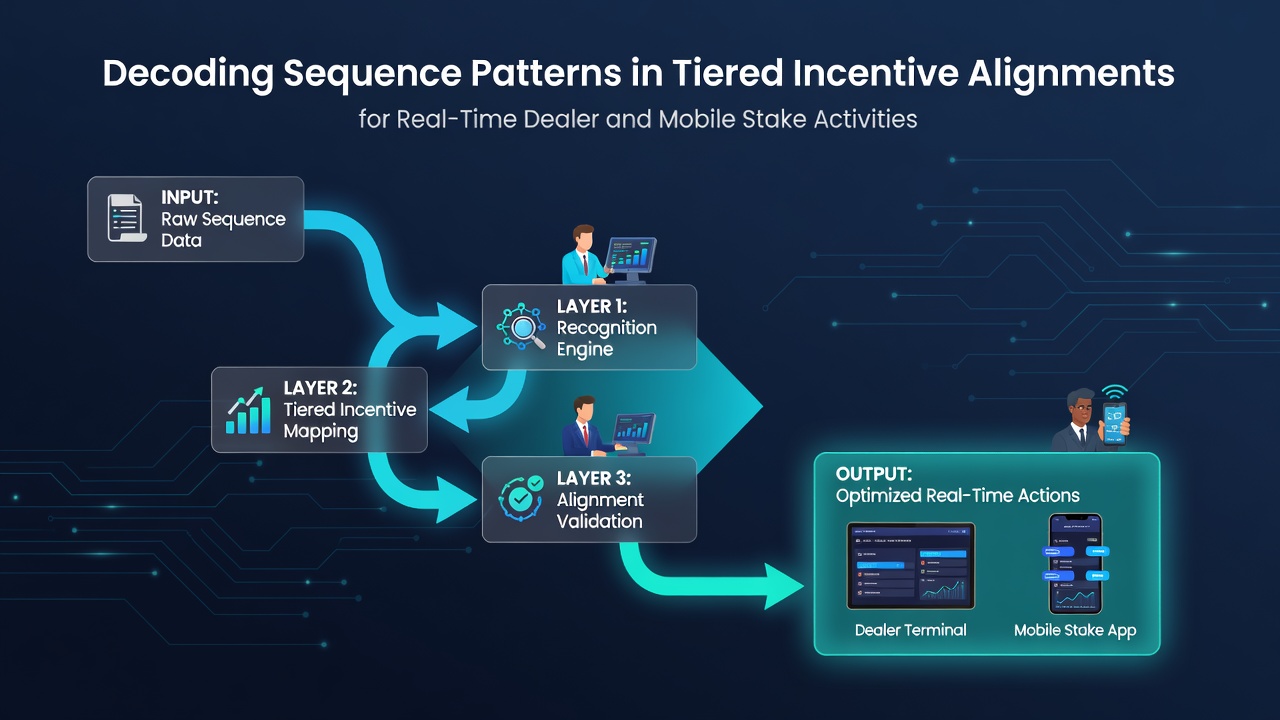
Sequence patterns emerge when operators structure tiered incentives to link mobile stake activities with real-time dealer rounds, and data from multiple jurisdictions shows these alignments follow predictable progressions based on deposit timing, wager sequences, and loyalty escalations. Operators deploy code sequences that convert initial mobile stakes into layered rewards while advancing players through status tiers, and this process relies on specific alignments between portable platform actions and live table outcomes.
Core Elements of Tiered Incentive Structures
Tiered systems operate through sequential stages where each level unlocks based on cumulative mobile stakes and participation in real-time dealer sessions, while researchers at institutions such as the University of Nevada, Reno have documented how these stages create chained dependencies. A player completes a base mobile stake, then the system routes the outcome toward a dealer round that triggers the next tier, and this pattern repeats as status advances. Observers note that the alignment depends on payment method choices because certain gateways accelerate the sequence by reducing processing delays between mobile deposits and live table credits.
Funding selections further shape advancement because e-wallet routes often bypass intermediate holds that traditional cards impose, allowing stakes to convert directly into reward layers. In July 2026 several platforms reported updated tier thresholds that incorporated new mobile stake multipliers, and these changes altered how quickly players moved from entry-level alignments to higher dealer round incentives.
Pattern Recognition in Mobile Stake Sequences
Sequence decoding begins with mapping the initial stake to the first incentive layer, then tracking how that layer feeds into subsequent mobile actions before crossing over to dealer tables. Patterns typically follow a three-step loop: deposit, stake conversion, and tier escalation, yet variations appear when operators insert cross-over sports wagers as optional bridges. Those who've studied transaction logs find that mobile platforms using instant payout gateways produce tighter sequence loops because funds recycle faster into the next aligned activity.
Alignment Mechanisms Between Mobile adn Dealer Environments
Real-time dealer rounds receive mobile stake data through integrated APIs that recognize tier status and apply corresponding multipliers, while the reverse flow sends table outcomes back to mobile wallets for continued staking. This bidirectional alignment creates closed loops where each completed dealer round can unlock an additional mobile incentive layer, and industry reports from the Australian Gambling Research Centre indicate such loops increase engagement metrics when payment pathways remain consistent across both environments.

Code sequences function as the connective tissue because they encode the rules for when a mobile stake qualifies for dealer round bonuses, and operators update these sequences periodically to reflect new regulatory thresholds or platform capabilities. Payment method choices determine whether the sequence executes in real time or encounters brief verification pauses, and handheld sports platforms often prioritize methods that support immediate tier recognition.
Layered Reward Escalation and Loyalty Integration
Loyalty escalations occur when mobile stake patterns accumulate enough points to trigger dealer round access at elevated tiers, and the process follows a documented order where base rewards precede multiplier applications. Data indicates that players who maintain consistent payment routes experience smoother escalations because the system recognizes the sequence history without additional verification steps. In portable environments this integration allows status tiers to carry over between mobile sessions and live dealer tables without resetting progress.
Transaction routes linking deposits to sequential incentives follow identifiable patterns such as deposit-to-stake-to-reward-to-escalation, and deviations appear mainly when external factors like jurisdictional rules alter the timing. Those monitoring platform updates in July 2026 observed several operators refining these routes to accommodate faster mobile-to-dealer transitions while preserving tier integrity.
Practical Examples of Sequence Execution
One documented case involves a mobile sports stake that converts into table credit, followed by a dealer round that returns layered rewards back to the mobile wallet, and this cycle repeats to advance the player through three consecutive tiers. Another pattern shows how choosing a digital wallet over a bank transfer shortens the interval between stake placement and incentive activation, allowing the sequence to complete within a single session. Observers note that these examples illustrate the core alignment principle where mobile actions feed dealer outcomes and vice versa.
Conclusion
Sequence patterns in tiered incentive alignments continue to evolve as operators refine connections between real-time dealer rounds and mobile stake activities, with payment pathways and loyalty mechanisms serving as primary variables. Data from regulatory and research sources demonstrates that consistent execution of these patterns supports predictable player progression across both environments, and updates observed in July 2026 reflect ongoing adjustments to maintain alignment efficiency. Further examination of transaction flows reveals that the underlying structures remain stable even as specific thresholds shift.